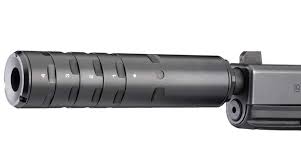
Buying a suppressor just got a whole lot simpler.
On October 9, 2026, the Bureau of Alcohol, Tobacco, Firearms and Explosives (ATF) announced a major change in how it will handle the sale and transfer of suppressors, short-barreled rifles (SBRs), short-barreled shotguns (SBSs), and certain other firearms regulated under the National Firearms Act (NFA).
The big news: ATF will no longer require prior NFA approval or registration for these items under its new enforcement policy.
For Gunprime customers, that means purchasing a suppressor can now look a lot more like purchasing a regular firearm.
Here's what changed, what hasn't, and what you need to know before placing an order.
1. No More Waiting for ATF Form 4 Approval
Traditionally, purchasing a suppressor involved several additional steps beyond buying a regular firearm.
Customers generally had to submit an ATF Form 4, provide fingerprints and photographs, and wait for ATF approval before taking possession.
That changes under the October 9 guidance.
ATF says it will no longer enforce the requirement to obtain NFA approval before transferring suppressors, SBRs, SBSs, and certain other covered firearms.
That means customers generally will not need to wait for Form 4 approval before taking possession of a suppressor, provided the transaction complies with other applicable federal, state, and local laws.
ATF will continue accepting voluntary NFA applications for customers who prefer to register their suppressors.
2. You Still Have to Complete a Form 4473
Suppressors are not completely unregulated.
Under the Gun Control Act, suppressors are still considered firearms. That means licensed dealers must continue following federal firearm transfer requirements.
When picking up a suppressor from your local dealer, you'll generally need to:
- Present valid government-issued identification.
- Complete ATF Form 4473.
- Pass the required NICS background check, unless a lawful exception applies.
- Meet applicable federal, state, and local eligibility requirements.
In other words, the process is now much closer to buying a handgun or other firearm.
The difference is that customers no longer have to wait for a separate NFA transfer approval under ATF's new policy.
3. How Will Buying a Suppressor From Gunprime Work?
For customers ordering online from Gunprime, the process is expected to be much simpler.
Step 1: Choose Your Suppressor
Browse the suppressors available at Gunprime.com and select the model that fits your needs.
Step 2: Select a Local FFL Dealer
As with other regulated firearms, suppressors generally must be shipped to an appropriate federally licensed dealer for transfer to the customer.
Step 3: Gunprime Ships Your Order to Your Dealer
Under the new guidance, ATF will no longer require Form 3 approval for transfers between licensed dealers. This eliminates an additional federal approval step that previously applied to many suppressor shipments.
Step 4: Complete Your Paperwork and Background Check
Your receiving dealer will complete the required Form 4473 process and background check, along with any additional requirements imposed by state or local law.
Step 5: Take Your Suppressor Home
Once your dealer has lawfully completed the transfer, you can take possession without waiting for a separate ATF Form 4 approval.
Keep in mind that not every FFL handles suppressors, and some dealers may need time to update their procedures in response to the new guidance.
Gunprime customers should verify that their selected dealer is willing and legally able to receive and transfer suppressors before ordering.
4. What About the $200 Tax Stamp?
Congress previously reduced the federal making and transfer tax on suppressors, short-barreled rifles, short-barreled shotguns, and certain other weapons to $0.
Today's announcement goes a step further.
ATF says it will no longer enforce the registration and prior-approval requirements associated with those covered items.
So customers are no longer subject to the traditional federal $200 suppressor transfer tax, and ATF is not requiring the previous tax-stamp approval process under its new policy.
The $200 NFA tax and full NFA requirements remain in place for machine guns and destructive devices.
5. Does This Apply to Short-Barreled Rifles and Shotguns?
Yes, but there are some additional considerations.
ATF's new enforcement policy also covers:
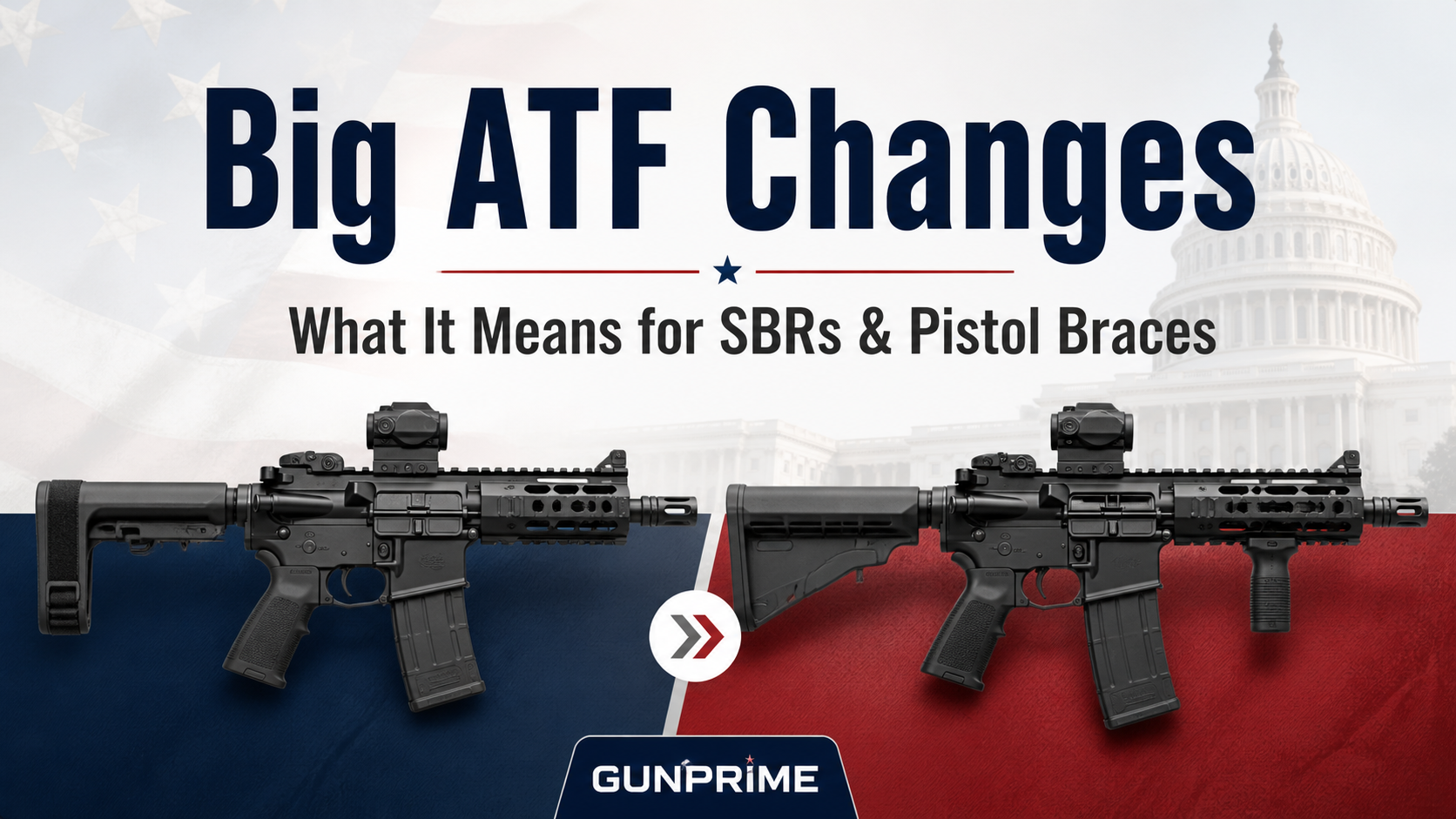
- Short-barreled rifles (SBRs)
- Short-barreled shotguns (SBSs)
- Suppressors and silencers
- Certain firearms classified as "any other weapons" (AOWs)
However, the Gun Control Act still contains additional restrictions on short-barreled rifles and short-barreled shotguns.
ATF has announced that it will temporarily decline to enforce a particular federal dealer-transfer approval provision while it develops updated regulations.
Also, customers transporting an SBR or SBS across state lines must still obtain the required ATF authorization through Form 20.
These additional interstate transportation requirements do not apply in the same way to suppressors under the federal guidance, although state and local laws must still be followed.
6. State Laws Still Matter
This is especially important for customers ordering suppressors online.
The new ATF guidance does not override state or local restrictions.
Some states prohibit suppressor ownership, while others have laws that condition possession on federal registration or compliance with the NFA.
ATF specifically warns that possession of an unregistered suppressor could still create legal issues under certain state laws.
For that reason, Gunprime and receiving dealers must continue to verify that transactions comply with the laws applicable to the purchaser.
A suppressor that can be transferred without an NFA approval under federal enforcement policy may still be prohibited or subject to additional requirements in your state.
7. What If You Already Own a Registered Suppressor?
If you already own a legally registered suppressor, the new guidance does not require you to do anything.
ATF will continue maintaining the National Firearms Registration and Transfer Record and accepting voluntary applications.
Owners may request removal of an existing registration, but ATF warns that a suppressor removed from the registry generally cannot be registered again unless a future amnesty or other applicable legal mechanism becomes available.
There is also some uncertainty about the long-term legal status of unregistered items.
The new policy is based in part on a federal court ruling and ATF's decision not to enforce certain requirements. Future legislation, court decisions, or policy changes could alter the situation.
Customers should carefully consider these issues before voluntarily removing an existing suppressor from the NFA registry.
8. When Does This Change Take Effect?
The new ATF guidance is effective immediately, October 9, 2026.
That doesn't necessarily mean every dealer will be ready to complete transfers under the updated process today.
Firearms dealers, distributors, and manufacturers may need time to update their systems, confirm receiving-dealer requirements, and ensure compliance with applicable laws.
Gunprime will continue following the latest ATF guidance and applicable federal, state, and local requirements as the industry adapts.
The Bottom Line for Gunprime Customers
This is one of the biggest changes to federal suppressor transfer procedures in decades.
Under ATF's newly announced policy, the lengthy NFA approval process that traditionally accompanied suppressor purchases is no longer being enforced.
Customers will still need to complete a Form 4473 and the applicable background check, but the process has the potential to become significantly faster and more straightforward.
At Gunprime, we're excited about the opportunity to make suppressor purchases easier for our customers while continuing to comply with all applicable laws.
We'll keep you updated as additional details become available.
Shop Gunprime.com for firearms, suppressors, and accessories.
Official ATF Sources
- ATF Open Letter - October 9, 2026
- ATF Frequently Asked Questions - Updated NFA Transfer Guidance
- ATF Official Press Release
Disclaimer: This article is provided for informational purposes and is not legal advice. Firearm laws and ATF enforcement policies can change. Always confirm applicable requirements with your receiving dealer and appropriate legal authorities before purchasing, transferring, making, or transporting an NFA item.